

It Ends With Me

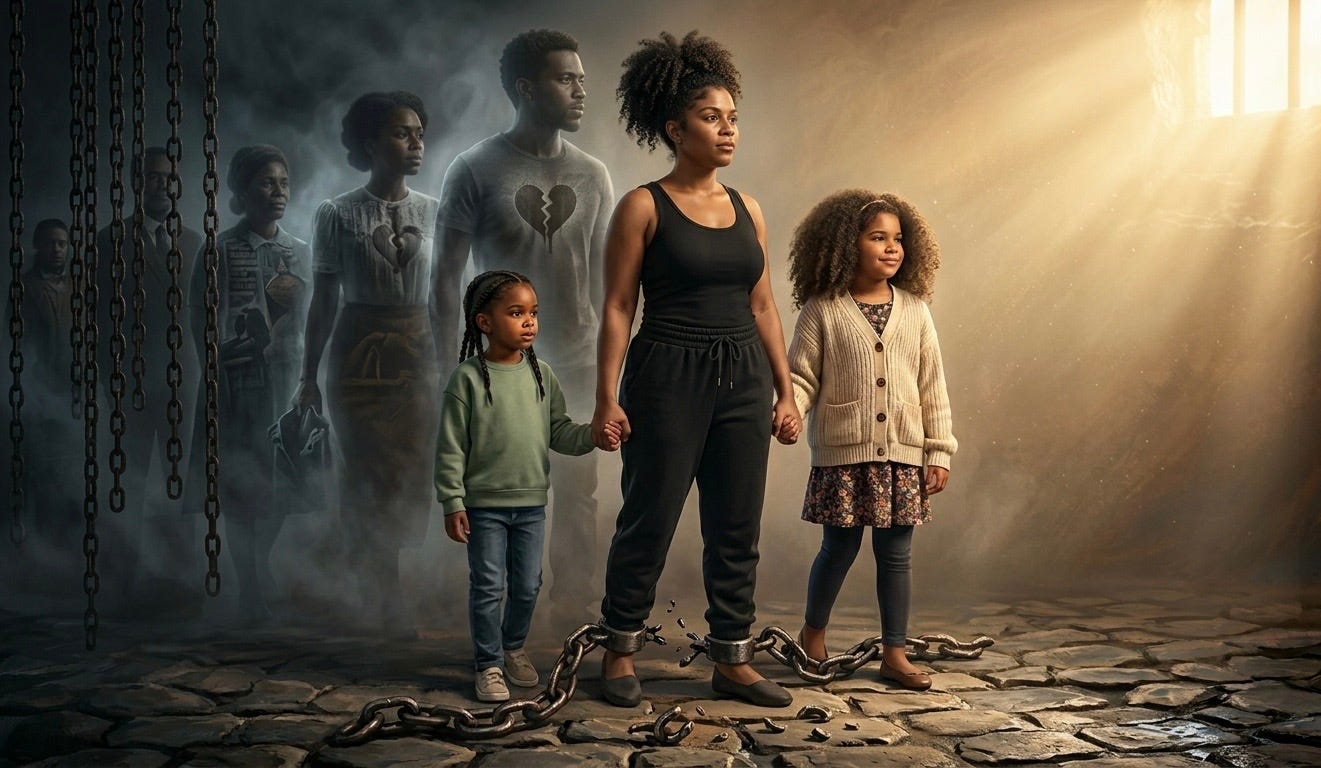
Everyone wants to talk about breaking generational curses. But nobody wants to talk about what it actually costs you to be the one who does it.
Breaking generational cycles requires a level of honesty that many families avoid. You have to look at patterns that were normalized and call them what they are. That wasn’t healthy. That wasn’t love. That wasn’t communication. That wasn’t discipline. That was survival. Survival can look normal when that’s all you’ve ever known.
Sometimes generational cycles are obvious — addiction, abuse, absent parents, financial instability. Sometimes, they’re quieter. Sometimes they look like unresolved trauma being passed down through silence. Families who don’t communicate. People who apologize through gifts but never changed behavior. Women being taught to endure unhealthy situations just to say they kept a family together. Men being taught to suppress emotions because vulnerability was seen as weakness. Children being raised by adults who were still carrying wounds they never addressed.
Then somewhere in that bloodline, God points at you.
Suddenly you’re the one expected to do the hard work. You’re the one learning how to heal. You’re the one going to therapy. You’re the one setting boundaries. You’re the one trying to parent differently. You’re the one praying through triggers your family pretended didn’t exist. That responsibility feels heavy sometimes.
There was a season in my life where I coped in unhealthy ways. Drinking, smoking, distracting myself, and running from pain instead of confronting it. At the time, I told myself I was just trying to survive. Truthfully…. I was.
But survival habits can easily become generational patterns if we don’t address them. God had to deal with me about that. He had to show me that numbing pain was never the same thing as healing it.
So I made a decision….
I started praying more. I started journaling more. I became more intentional about therapy. I allowed myself to sit with emotions I spent years trying to avoid. Guys, healing is not glamorous. Healing will have you crying over childhood wounds on a random Tuesday afternoon. Healing will force you to confront things you thought you buried years ago. Healing will make you set boundaries with people who were comfortable with the old version of you. That part can feel incredibly lonely. Because not everyone celebrates your healing. Some people benefited from your lack of boundaries. Some people were comfortable when you stayed quiet. Some people preferred the version of you that tolerated dysfunction.
So when you start changing, people notice. And not everyone likes it.
You’ll hear things like: “You’ve changed.” “You think you’re better than everyone.” “You’re distant.”
To be honest, I have changed. I prayed for this growth. I begged God for this peace. And I refuse to return to dysfunction just because my healing makes others uncomfortable.
Then…. there’s motherhood.
Healing while raising children is a different kind of pressure, because now your decisions don’t just affect you. You start asking yourself difficult questions. What do I need to unlearn? What emotional safety did I wish I had? What patterns need to stop before they reach my children? That part will humble you quickly. Especially while grieving.
Losing my father changed me in ways I’m still processing. Grieving someone you deeply love while still showing up as a mother is one of the hardest things I’ve ever experienced. There were days I felt completely broken. Days where I leaned heavily on God because I truly had nothing left to give. But grief taught me something important: life is too short to stay committed to dysfunction. Too short to keep repeating harmful cycles simply because “that’s how things have always been.”
No. It stops here. With me.
Not because I’m perfect. Not because I have all the answers. But because I’m willing. Willing to heal, grow, and to apologize when necessary. Willing to choose peace. Willing to create a healthier future for my children. Maybe that’s what breaking generational curses really looks like. Not perfection. But intentionality.
Choosing healing even when it feels lonely. Choosing discipline over self destruction. Choosing peace over chaos. Choosing accountability over denial. Choosing faith over fear. Also, trusting that your children — and the generations after you, will benefit from the hard decisions you’re making right now.
That’s legacy. That’s purpose. That’s obedience.
Some days it feels exhausting. But I remind myself often: my children deserve a version of me that healed. And I deserve peace too. So the unhealthy coping stops with me. The silence stops with me. The dysfunction stops with me. The survival mode stops with me.
It ends with me.
And what begins after me? Healing, freedom, peace, and a legacy my children won’t have to recover from.

I 1000% relate! Being the willing individual in your bloodline to break toxic cycles that were passed down generationally is extremely hard and isolating; yet, imperative and beneficial for ourselves and future generations to come. I heard Pastor Jerry Flowers say, “Stop expecting those who passed down the [toxic] generational cycle to support you while you’re breaking it.” That statement encourages me every time I feel lonely, unsupported, or met with pushback in this difficult, but rewarding process. Thank you for sharing your Godly wisdom and testimony! 🙏🏽✝️✨
This is a super POWERFUL message, Kristen 🙏 It's never about perfection but about intentionality 🥹🙏 God bless you !!!